

-
-
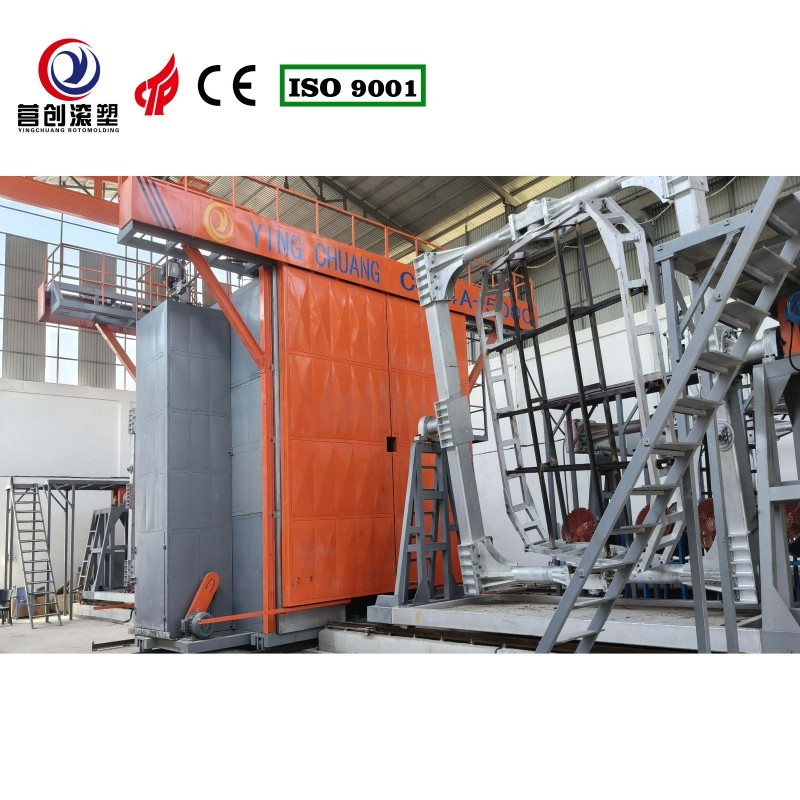
ProductsLarge 4-Arm Shuttle Rotational Molding Machine for Producing Large Water Tanks
-
-
Contact




Do you understand the rotational molding process of transparent rotationally molded products?
Release time:
2021-07-19
Transparent rotational molding products require high light transmittance, which inevitably demands strict surface quality standards for the molded products. There must be no streaks, air holes, or whitening. Defects such as haze, black spots, discoloration, and poor gloss must be avoided. Therefore, throughout the injection molding process, great attention must be paid to the materials, equipment, molds, and even the design of the products, with strict and even special requirements being proposed.
Transparent rotational molding products require high light transmittance, which necessitates strict surface quality requirements for the products, with no blemishes, air holes, or whitening. Defects such as haze, black spots, discoloration, and poor gloss must be avoided, thus requiring careful attention and strict, even special, requirements for materials, equipment, molds, and even product design throughout the injection molding process.
Secondly, since transparent rotational molding products often have a high melting point and poor fluidity, to ensure the surface quality of the products, it is often necessary to make fine adjustments to process parameters such as machine temperature, injection pressure, and injection speed, so that the mold is filled during rotational molding without generating internal stress that could cause product deformation and cracking. Therefore, strict operations must be conducted in terms of raw material preparation, equipment and mold requirements, rotational molding processes, and raw material handling.
1. Preparation and drying of materials: Any impurity in the plastic can affect the transparency of the product, so during storage, transportation, and feeding processes, it is essential to ensure sealing to keep the raw materials clean. Especially since moisture in the raw materials can cause deterioration upon heating, they must be dried, and during injection molding, dry feeding hoppers must be used.
It is also important to note that during the drying process, the input air should preferably be filtered and dehumidified to ensure it does not contaminate the raw materials. The drying process for transparent rotational molding products is as follows: Material Process Drying Temperature (°C) Drying Time (h) Material Layer Thickness (mm) Remarks pmma 70~80 2~4 30~40 pc 120~130 >6 <30 Use hot air circulation drying pet 140~180 3~4 Continuous drying feeding device is preferred.
2. Cleaning of the barrel, screw, and their accessories: To prevent raw material contamination and the presence of old materials or impurities in the recesses of the screw and accessories, especially for resins with poor thermal stability, it is necessary to clean all parts with a screw cleaning agent before use and after shutdown to ensure they are free of impurities. If no screw cleaning agent is available, resins such as pe and ps can be used to clean the screw.
When temporarily shutting down, to prevent the raw materials from staying at high temperatures for too long, causing degradation, the temperature of the dryer and the barrel should be lowered. For example, the barrel temperature for pc and pmma should be reduced to below 160°C. (The hopper temperature for pc should be reduced to below 100°C).
3. Issues to pay attention to in mold design (including product design): To prevent poor flow or uneven cooling that could lead to poor plastic forming, surface defects, and deterioration, the following points should generally be noted during mold design:
a= The wall thickness should be as uniform as possible, and the draft angle should be sufficiently large;
b= The transition parts should be gradual and smooth to prevent sharp corners and edges, especially for pc products, which should not have any notches;
c= The gate and runner should be as wide, short, and thick as possible, and the gate position should be set according to the shrinkage and condensation process, with cold wells added if necessary;
d= The mold surface should be smooth, with low roughness (preferably below 0.8);
e= The vent holes must be sufficient to promptly expel air and gases from the melt;
f= Except for pet, the wall thickness should not be too thin, generally not less than 1mm.
Next
Previous Page
Next Page


E-mail:rotomould@czyingchuang.com
Website:www.rotomoldmachinery.com
Add:30 Chuangye West Road, Xinbei District, Changzhou City, Jiangsu Province,213002,China.


Official Mobile Station